
xwllz
Attack-surface management for blue teams — discover, monitor, report.
What xwllz tracks
Attack-surface mapping
Discover every reachable host, subdomain, and IP range tied to your organization.
Asset discovery
Enumerate services, ports, and certificates to see what's actually exposed.
Continuous monitoring
Track changes to your perimeter and get alerted the moment something shifts.
Threat correlation
Cross-reference discovered assets against known vulnerabilities and threat intel.
CLI & API
Automate scans and pipe results straight into your existing toolchain.
Team dashboards
Share findings with your security team in clean, digestible views.
How it works
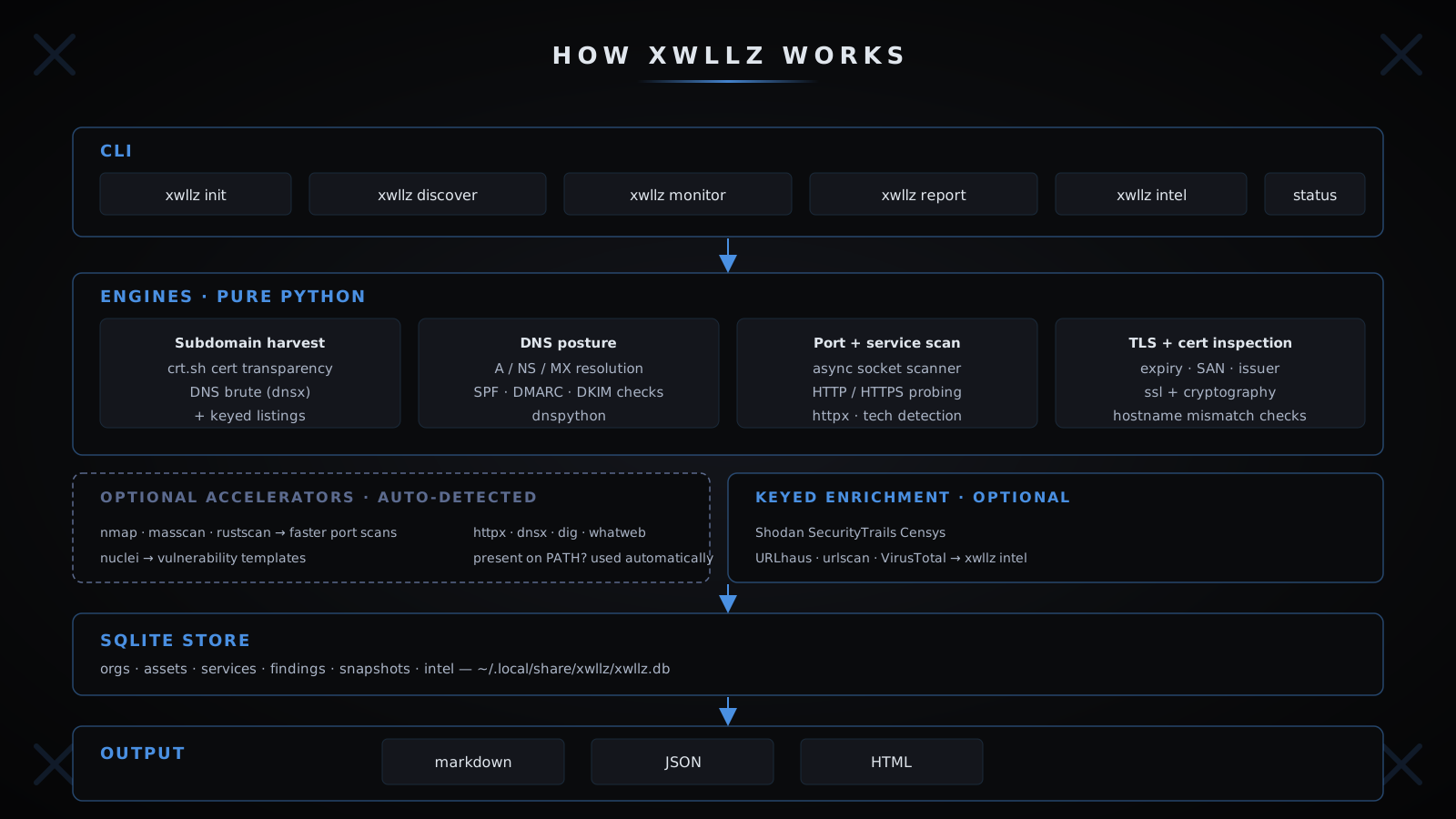
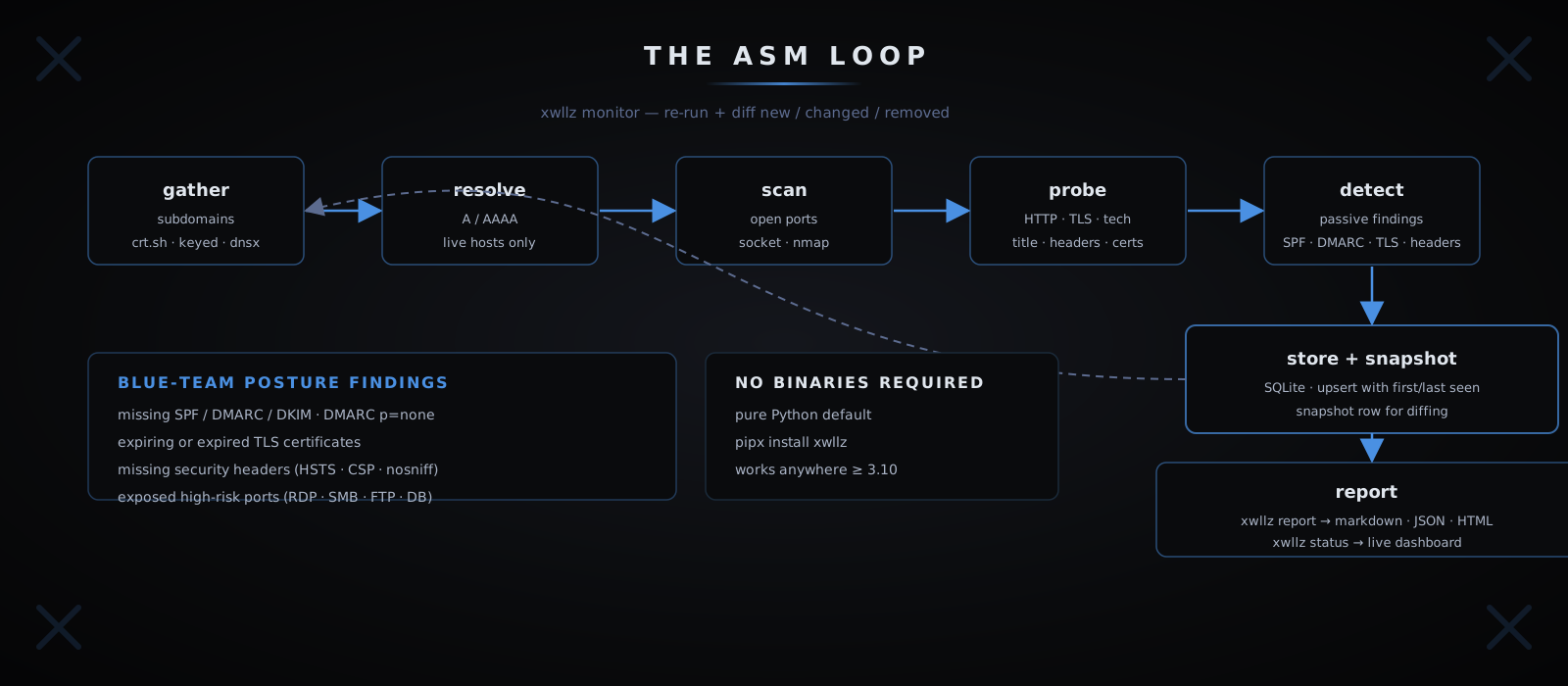
The ASM loop
Built for the terminal
$ xwllz discover acme --passive

  [+] harvesting certificate transparency . . . 1,284 subdomains
  [+] resolving hosts . . . 312 live
  [+] checking DNS posture (SPF / DMARC / DKIM) . . . 27 risks
  [+] writing snapshot . . . done

  done — 27 exposure points mapped in 4.2s
Install in seconds
$ pipx install xwllz

$ xwllz init acme --domains example.com
$ xwllz discover acme
$ xwllz monitor acme
$ xwllz report acme --format md
Legal disclaimer
This software is intended for defensive security purposes only. Use it solely on systems and networks you own or are explicitly authorized to test. The author(s) assume no liability for any damages or legal issues arising from misuse. Always comply with all applicable laws and regulations.